

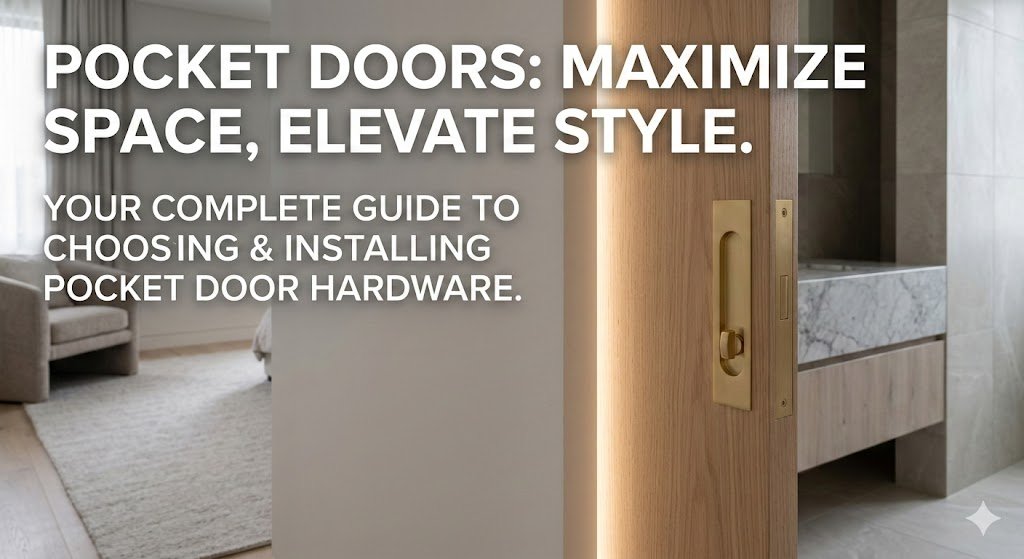
Pocket doors give a simple, uncluttered look while quietly saving valuable floor space. Yet many property owners struggle with selecting the right door lock for pocket doors. Hardware details shape both security and daily comfort. This guide explains how pocket door hardware works, how to select high quality options, and how to install them correctly for long lasting performance.
Pocket Doors Redefine Space
Many recent remodels include Sliding Barn Doors because they solve real space problems. The door disappears into the wall, so the room feels open without changing its footprint.
When planning pocket doors, hardware choices deserve careful attention. A carefully selected door lock for pocket doors ensures privacy without sacrificing design. Many property owners also explore sliding door hardware that matches current interior trends.
Because open layouts dominate recent building styles, Bi-fold doors now appear in bedrooms, offices, and bathrooms. Even commercial applications use them to save space. Therefore, understanding hardware options becomes essential before installation begins.
Hardware Shapes Everyday Comfort
Hardware influences daily experience more than expected. A smooth sliding motion, secure latch, and easy grip all matter. Pocket door hardware includes locks, passage sets, flush pulls, and pocket door pulls.
Choosing hardware involves more than appearance. The thickness of the door and the door slab design determine which lock fits correctly. Additionally, the door frame depth affects how the pocket door lock sits inside the cavity.
Since sliding doors hide inside the wall, standard knobs rarely work. Instead, flush pulls sit neatly on the surface. Many property owners also prefer a turn button system for simple privacy control.
Understanding Locking Options
A door lock for pocket doors comes in several styles. Each serves a different purpose. For example, passage sets allow free movement between rooms. These sets work well for closets or open living areas.
Bathrooms and bedrooms often require privacy. In such spaces, a pocket door lock with a turn button offers convenience. The lock engages smoothly and includes an emergency release feature for safety.
Some situations demand higher security. A keyed lock or keyed pocket system provides controlled access. These options suit home offices or certain commercial applications. However, installation must align with the edge of the door and internal cavity clearance.
Design Meets Functionality
Today’s interiors often feature clean lines and minimalist hardware. Therefore, many property owners select exposed pocket door styles for a decorative statement. In this setup, sliding door hardware remains visible, adding character to the room.
Curved pocket doors also appear in contemporary designs. These doors require specialized pocket door hardware because the track follows a curved path. As a result, standard locks may not fit without modification.
Double pocket doors create dramatic openings between rooms. When closed, they meet in the center. In such cases, coordinating two locks or selecting a central latch system ensures proper alignment and smooth operation.
Choosing High-quality Materials
Hardware quality determines long-term satisfaction. High-quality components resist wear and maintain smooth movement over time. Many manufacturers now produce durable finishes that withstand daily use.
When choosing hardware, examine the material of the door slab. Solid wood doors often require deeper lock mortises. Hollow core designs may need lightweight hardware. However, evaluating the door’s thickness is paramount before purchasing.
Because pocket doors slide inside a wall cavity, repairs become more complex after installation. Investing in reliable pocket door hardware reduces the likelihood of future adjustments.
Installation Requires Precision
Proper installation ensures reliable performance. Make sure that the frame is perfectly aligned within the opening of the wall. The slightest deviation may result in the door sliding or even lock in an unstable direction.
Next, position the lock accurately along the edge of the door. The lock body must sit flush with the surface. Additionally, flush pulls should align evenly for comfortable grip.
During installation, attention to detail prevents frustration later. For example:
- Check cavity depth before installing the pocket door lock.
- Confirm track alignment for smooth sliding doors.
- Test the emergency release mechanism before final assembly.
Proper preparation minimizes future maintenance needs.
Privacy and Safety Considerations
Privacy is paramount when selecting a door lock for pocket doors. Bathrooms and bedrooms often need secure locking systems. A turn button style provides simple operation from inside the room.
At the same time, safety remains important. An emergency release allows entry from outside in urgent situations. Many modern pocket door lock designs include discreet release slots for this reason.
For families with children or spaces that are shared, solid hardware can give peace of mind. So, taking a look at access and privacy features can help with the process of making a balanced choice.
Style Trends Influence Choices
Interior design trends now favor subtle, integrated hardware. Flush pulls sit neatly within the door surface, creating a seamless look. Meanwhile, exposed pocket door systems add industrial charm.
Metal finishes like satin black or brushed nickel have a dominant place in current collection. These styles complement contemporary interiors. Since wall-mounted doors are often used to create smaller spaces, their design has a major influence on the entire design.
Even in commercial applications, designers prioritize visual consistency. Coordinating sliding door hardware with surrounding fixtures enhances cohesion across the space.
Maintenance Extends Lifespan
Routine care protects pocket door hardware over time. Sliding tracks benefit from occasional cleaning to remove dust buildup. Smooth tracks support quiet operation and prevent strain on the lock mechanism.
Locks should receive periodic inspection. If a pocket door lock begins to stick, adjusting alignment may restore function. Since sliding doors operate within enclosed cavities, minor issues deserve early attention.
High-quality hardware generally requires minimal maintenance. Still, simple checks help preserve long-term performance and reliability.
Making a Confident Selection
The right lock for bi-fold doors requires an in-depth analysis. Think about how frequently you will use the door. Consider privacy requirements with care. Examine the door slab construction and frame depth.
Also, review whether the design includes double or curved pocket doors. Each variation may require specific pocket door hardware.
While options can seem overwhelming at first, clarity is revealed by careful analysis. In balancing durability, function, and style, property owners design solutions that promote both style and comfort.
Conclusion
Wall-mounted doors alter interior spaces in a stylish and functional manner. Yet hardware decisions shape how those doors perform every day. Selecting the best lock guarantees privacy, security, as well as visual harmony.
When you focus on premium products, proper installation, and a well-thought out design, long-term satisfaction of customers becomes possible. By paying attention to every detail, these doors offer seamless operation as well as refined elegance over time.
FAQs
What makes a door lock for pocket doors different from regular locks?
A door lock for pocket doors fits inside a sliding door that disappears into a wall. Traditional knobs require clearance, which these doors lack. Therefore, pocket door locks use flush pulls and compact mechanisms. Many include a turn button and emergency release for added convenience.
How do curved pocket doors affect hardware selection?
Curved pocket doors follow a rounded track system. Because of this shape, standard sliding door hardware may not align properly. Specialized pocket door hardware ensures smooth movement and proper locking. Careful measurement of the door slab and frame depth supports correct installation.
Why do double pocket doors require special attention?
Double pocket doors meet at the center when closed. Alignment becomes critical for proper locking. Some designs use coordinated passage sets, while others rely on a central keyed pocket system. Accurate placement along the edge of the door ensures smooth operation.
When should a keyed lock be used on pocket doors?
A keyed lock works well for home offices, storage areas, or certain commercial applications. It provides additional security compared to standard privacy locks. Before installation, the thickness of the door and internal cavity space should be reviewed carefully.
How can sliding door hardware stay durable over time?
Sliding door hardware lasts longer with regular care. Tracks benefit from gentle cleaning to remove debris. High-quality materials resist wear and maintain smooth motion. Periodic inspection of the pocket door lock and flush pulls prevents larger issues later.
