

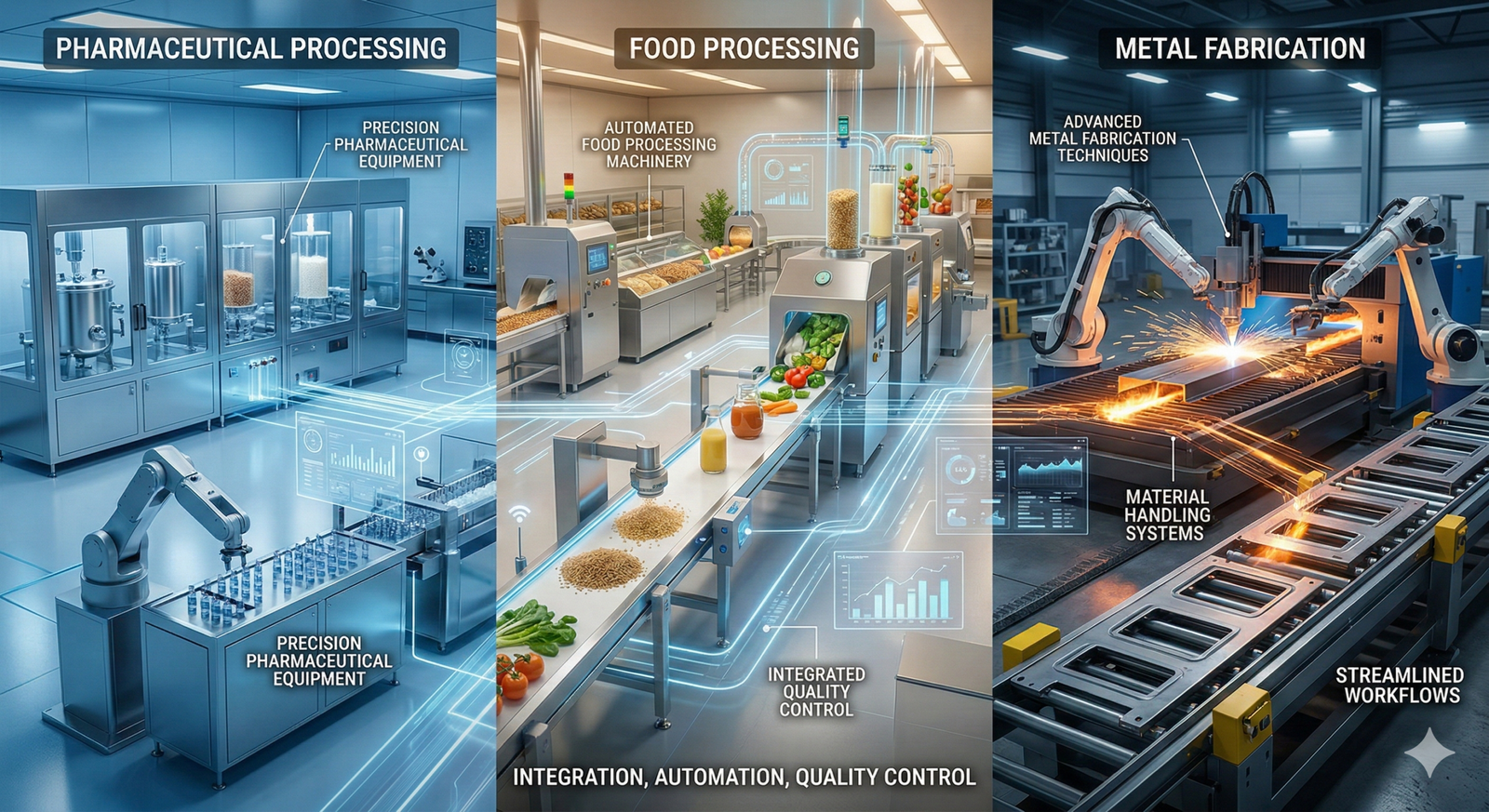
Modern production demands thoughtful choices around pharmaceutical processing equipment, metal fabrication techniques, and food processing machinery. Each category supports consistent output, safe handling, and efficient workflows. Careful planning strengthens product quality and balances investment value while supporting long-term operational stability across modern industrial environments.
This guide walks through core considerations shaping modern industrial processing choices. It highlights automation, control systems, and material handling. In addition, practical observations help you align industrial equipment with unique requirements, steady manufacturing operations, and reliable results that reinforce product quality and operational trust.
Equipment Shapes Output
Every manufacturing process reflects the capabilities of chosen process equipment. Suitable pharmaceutical processing equipment stabilizes measurement precision, protects material integrity, and supports strict quality control expectations. Consequently, dependable systems guide manufacturing operations toward repeatable outcomes without unnecessary interruptions.
Additionally, food processing machinery maintains consistency across preparation stages. Controlled temperature and pressure help sustain product quality and hygiene. Meanwhile, responsive control systems adjust flow rates or mixing speeds, allowing specific operations to remain predictable across demanding food processing routines.
Furthermore, metal fabrication techniques influence structural accuracy and durability. Equipment supporting forming, cutting, or joining materials encourages efficiency during manufacturing process cycles. Balanced coordination between machines and automated systems reduces waste, supports worker safety, and strengthens return on investment over long-term production timelines.
Automation Enables Precision
Automation continues shaping modern industrial facilities. Integrated sensors and control systems collect real-time data that helps you track material handling conditions. Therefore, industrial equipment reacts faster to variations, protecting product quality while stabilizing temperature and pressure across evolving manufacturing operations.
Automated systems also enhance pharmaceutical processing equipment performance. Precision controls manage blending, filtration, and containment tasks. Consequently, such coordination strengthens quality control and limits contamination risks. Balanced automation fosters trust in product outcomes while preserving reliable process equipment alignment with unique requirements.
Moreover, automated food processing machinery supports predictable throughput. Programmable settings maintain accurate timing and mixing. Additionally, responsive calibration tools detect irregularities before disruptions spread. Thus, food processing workflows remain consistent, efficient, and aligned with modern industrial productivity expectations.
Material Handling Matters
Material handling directly affects production flow. Organized transport systems guide ingredients or raw components safely through industrial equipment. Smooth transitions between stages strengthen worker safety while minimizing delays. Consequently, coordinated handling improves product quality and encourages steady manufacturing operations.
Effective handling also complements metal fabrication techniques. Reliable positioning systems support accurate shaping and assembly activities. Furthermore, advanced conveyors synchronize movement with automated systems. Such alignment enhances precision, ensuring finished structures match dimensional expectations and reduces costly adjustments later.
In parallel, food processing machinery benefits from careful handling design. Controlled transfer reduces contamination risks and protects temperature stability. Therefore, thoughtful layouts connect process equipment smoothly, allowing food processing environments to maintain quality control standards and protect operational continuity across extended production schedules.
Quality Control Drives Confidence
Strong quality control establishes credibility. Measurement tools embedded within pharmaceutical processing equipment track variables continuously. Consequently, real-time feedback guides adjustments that preserve material consistency. Balanced monitoring ensures manufacturing process outcomes reflect accuracy while protecting long-term trust in industrial equipment capability.
Additionally, inspection technologies complement metal fabrication techniques. Sensors evaluate structural tolerances during shaping phases. Therefore, you gain clearer insight into performance stability. This oversight strengthens manufacturing operations while reducing corrective rework that weakens productivity and returns on investment.
Likewise, verification systems embedded in food processing machinery safeguard hygiene and uniformity. Controlled observation protects product quality across preparation cycles. Moreover, integrated records strengthen transparency around specific operations, reinforcing accountability while preserving modern industrial credibility across evolving expectations.
Investment Supports Longevity
Financial planning shapes equipment adoption decisions. Balanced spending on pharmaceutical processing equipment often improves return on investment through durability and performance stability. Therefore, careful evaluation of industrial equipment lifespans protects operational continuity while aligning long-term expectations with manufacturing operations planning.
Similarly, upgrades within metal fabrication technique environments deliver measurable value. Modern process equipment reduces manual adjustments and increases throughput reliability. Consequently, streamlined manufacturing process cycles lower downtime exposure, supporting efficient material handling and dependable output across demanding production periods.
Meanwhile, investment in food processing machinery strengthens adaptability. Modular equipment configurations adjust to changing product lines. Besides, automated systems maintain predictable energy consumption patterns. Such balance reinforces sustainable resource use while sustaining quality control and dependable food processing performance.
Adaptation Guides Progress
Industrial environments continue evolving. As pharmaceutical processing equipment evolves, the operations stay better prepared for compliance demands and safety responsibilities. Consequently, responsive design ensures process equipment remains relevant while supporting worker safety, stable temperature, and pressure conditions.
Advancement within metal fabrication techniques also reflects adaptation. Digital modeling tools and responsive machinery allow detailed customization. Therefore, flexible manufacturing operations respond effectively to shifting production goals while maintaining product quality across specialized structural outcomes.
At the same time, food processing machinery evolves through sensor-driven insights. Data-supported calibration supports real-time adjustments across food processing stages. Such responsiveness sustains modern industrial productivity, allowing your manufacturing process to remain resilient and efficient across changing operational demands.
Conclusion
Industrial advancement rarely happens by chance. It grows from aligning technical systems with realistic planning and operational understanding. Bringing pharmaceutical processing equipment together with metal fabrication techniques and food processing machinery supports dependable quality and encourages stable manufacturing routines through demanding cycles.
Thoughtful equipment selection enhances material handling, quality control, and automated systems performance. As a result, you cultivate stronger return on investment while protecting worker safety. Such alignment allows industrial equipment strategies to evolve confidently, supporting long-term adaptability and dependable manufacturing process success.
FAQs
Why does pharmaceutical processing equipment influence product quality?
Pharmaceutical processing equipment controls mixing accuracy, filtration stability, and containment precision. These factors protect material integrity and strengthen quality control outcomes. When conditions remain stable, your manufacturing process produces consistent batches that align with strict expectations and long-term operational reliability.
How do metal fabrication techniques affect manufacturing operations?
Metal fabrication techniques guide shaping accuracy and assembly reliability. Proper coordination between process equipment and automated systems improves dimensional precision. This alignment limits rework, protects material handling efficiency, and supports product quality while improving return on investment across demanding production schedules.
How Food Processing Machinery Supports Daily Plant Operations?
Food processing machinery supports clean handling, stable timing, controlled temperature, and pressure conditions, allowing production routines to stay organized and consistent throughout demanding schedules. Such capabilities support predictable food processing outcomes. When equipment integrates monitoring tools, your manufacturing operations maintain quality control while preserving product quality through each preparation stage.
When should process equipment upgrades be considered?
Process equipment upgrades often become relevant when performance stability declines or operational goals shift. Modern industrial improvements enhance real time monitoring and automated systems coordination. Timely adoption supports worker safety, strengthens manufacturing process efficiency, and aligns industrial equipment with evolving unique requirements.
How does material handling connect with pharmaceutical processing equipment?
Material handling influences transfer safety and contamination prevention. When systems connect smoothly, pharmaceutical processing equipment receives steady inputs. This structure helps maintain product quality, strengthens quality control visibility, and keeps manufacturing activities moving without avoidable interruptions.
